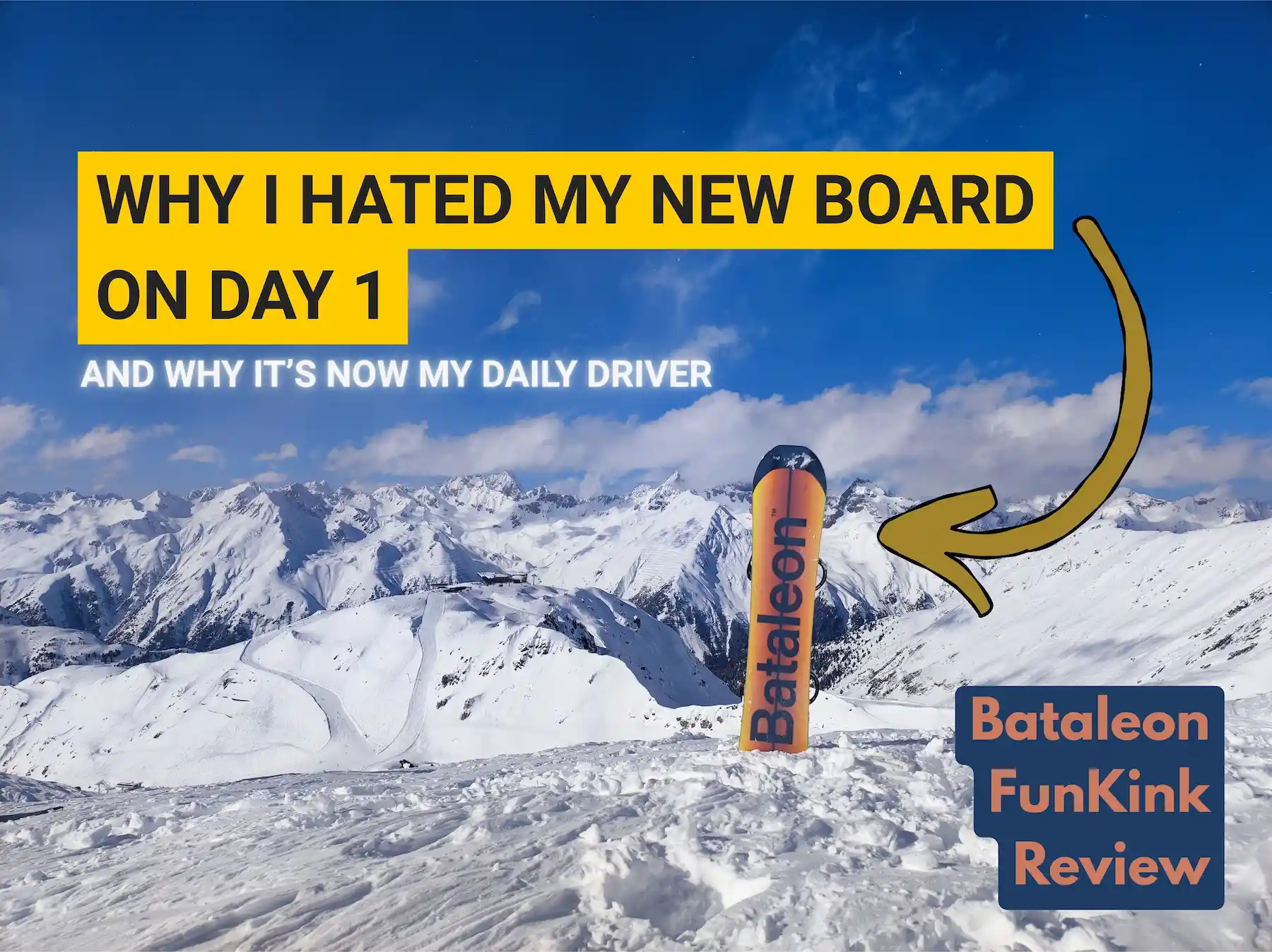
I bought my Bataleon FunKink (2024 model) at a local shop here in Latvia (where I’m from). It was the end of the run for sizes, so I snagged the 154cm model for €391 (that’s roughly $460 or £345) down from the usual retail price for the FunKink at that time €450+.
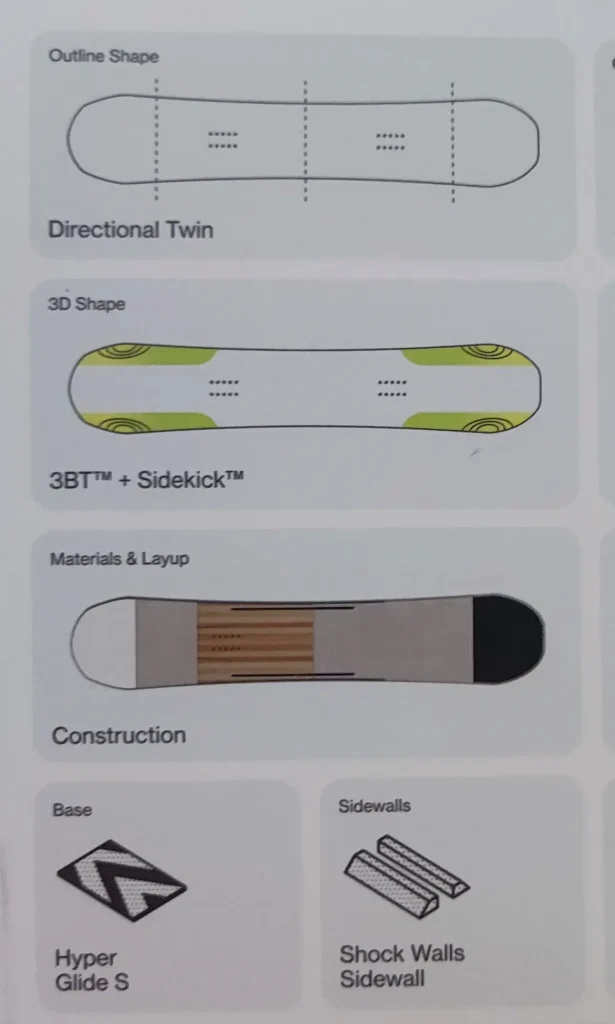
Standing in the shop, it looked perfect on paper. I’m 180cm tall and just under 80kg (with gear), so the 154cm felt like a playful, maneuverable size for me. The label promised everything I wanted: “Directional Twin,” “Medium Camber,” and a forgiving “4/10 Flex.”
I took the board straight to Riekstukalns, my local resort near Riga. The conditions were typical for Latvia – hardpack, a bit of ice, and flat light. I strapped in, expecting that ‘new board’ magic.
Instead, I felt panic.
On the first run, the board felt incredibly ‘loose.’ Usually, when you ride a flat base, you feel the steel edges biting into the snow, locking you in. But with the FunKink, it felt like I was drifting on a bar of soap. It felt very weird. On the flat cat tracks, it felt slippery, like I had no edges. I honestly thought I had wasted my money on a board that was too advanced for me.
I remember standing at the bottom of the hill, looking at my new, shiny board, thinking: ‘Did I just waste €400? Is this board broken? Or do I just suck?’
But I stuck with it. And by Day 2? Everything changed.
I realized: I wasn’t fighting the board; I was fighting my own muscle memory.
The science behind why the board felt “weird” at the beginning
That slippery feeling wasn’t a defect – it was 3BT (Triple Base Technology), which most, if not all, Bataleon snowboards have. I’ll try to explain you the Bataleon’s 3BT and other manufacturers 3D technology later in a different post.
If you look at the photo I took of the board’s spec label, you’ll see the diagram for “3BT + Sidekick.”
Here is what that actually means for us normal riders: Most snowboards are flat across the bottom. Bataleon boards are shaped like the hull of a boat. The center base is flat, but the edges near the nose and tail are lifted up.
- Why I hated it at first: When you are riding flat (like on a cat track), your edges aren’t touching the snow. The board feels like it’s floating or drifting. It takes a day to get used to not having that “locked-in” feeling.
- Why I love it now: As soon as you lean into a turn, the edge engages smoothly. There is no “catch.” It feels telepathic – I just think about making a turn, and the board just rolls into it.
Under the Hood (Specs I Learned to Love about the board) I’m not a gear nerd, but looking back at the label, a few other specs explain why this board saved my season:
- Flex 4/10: It’s soft. Really soft. This makes it playful for the small jumps and box slides I’m learning.
- D.S.T (Dual Super Tubes): I honestly didn’t know what this was when I bought it. Turns out, they are hollow carbon tubes milled into the core to give it “pop.” Even though the board is soft, I can still ollie over skier debris without effort.
- Hyper Glide S Base: It’s quite fast for a board this soft.
From Latvian Hills to the Austrian Alps
After getting comfortable on the small hills in Latvia, the real test came a month later. My friends and I booked a week in Ischgl and the surrounding Paznaun valley resorts (Kappl, Galtür, See).
This was the big question mark: Could a 154cm “Park” board handle real mountains?
I am 180cm and nearly 80kg. On paper, a 154cm board is on the short side for freeriding. I was worried that at high speeds in Ischgl, the board would chatter or wash out, but my experience turned out quite opposite.
Riding Deep Powder with a “Park” Board
We got lucky with the weather, because the powder gods were in a very good mood the week before our trip. We ended up doing a lot of off-piste riding in Kappl and later in the Zillertal Arena (Mayrhofen/Hintertux).
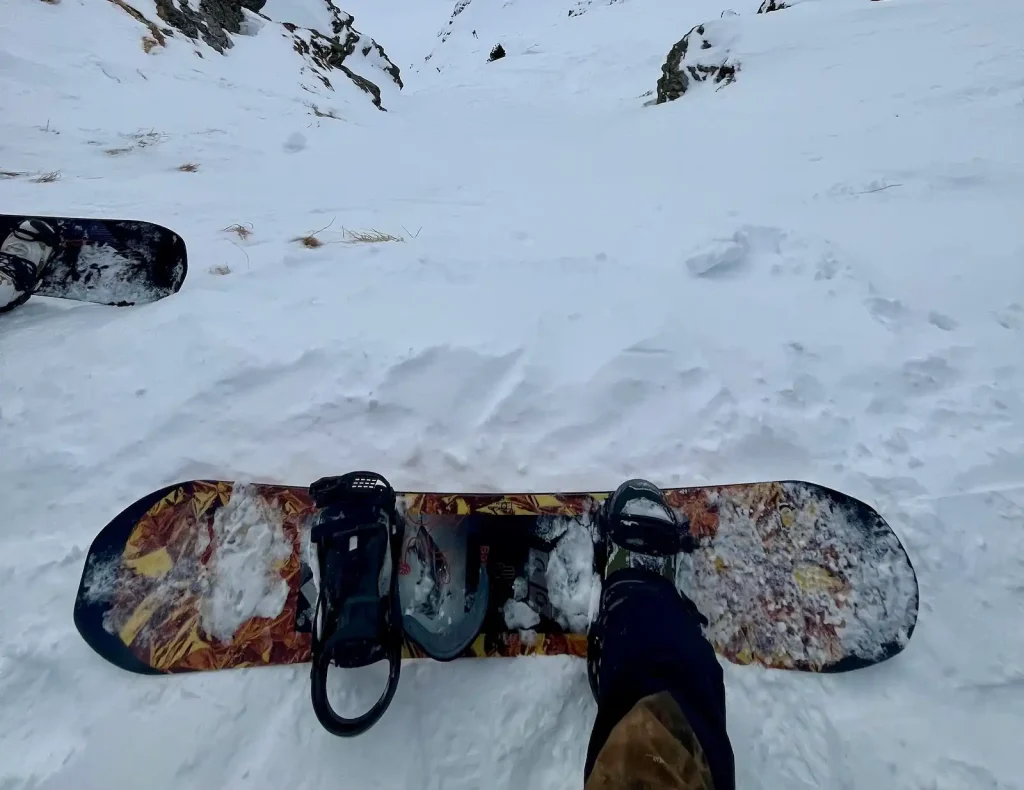
Usually, for powder, you want a stiff, long board with a set-back stance. The FunKink is a soft twin. But this is where that 3BT shape saved me again.
- The Float: Because the nose is shaped like a spoon (uplifted sides), it naturally pushes snow down and lifts the nose up. I didn’t have to burn my back leg leaning back as much as I expected.
- The Safety: In choppy, tracked-out snow, the uplifted edges meant I rarely “caught” an edge. I felt surprisingly safe charging through messier snow.
The Speed Limit
I have to be honest – there is a limit. When we were bombing down the steep, icy groomers in Mayrhofen at full speed, I could feel the board’s softness (Flex 4/10).
- It’s not a charger. If you try to race your friends on pure ice, the tail can feel a bit “washy.”
- But I’m not racing. I’m cruising and looking for side-hits. For that style of riding, the trade-off was definitely worth it.
The Progression Effect
Coming back to Latvia after that trip, I felt like a different rider. Maybe it was the Alps, or maybe it was the board giving me confidence. I started trying box slides and small jumps – things I was too scared to do on my old gear. The FunKink is soft enough that if you land slightly wrong, it doesn’t punish you instantly. It lets you get away with mistakes. And that builds the confidence you need when starting out.
The “Villain” in My Setup
I can’t talk about this board without mentioning what I strapped onto it.
My setup is… not perfect. I paired the FunKink with HEAD bindings from the cheaper shelf on the store (which honestly worked fine) and a pair of ThirtyTwo Shifty boots. Have to be honest about the purchase – I got them because they had the cool khaki colour, the Boa strap and good price. Did not put much research into them before.
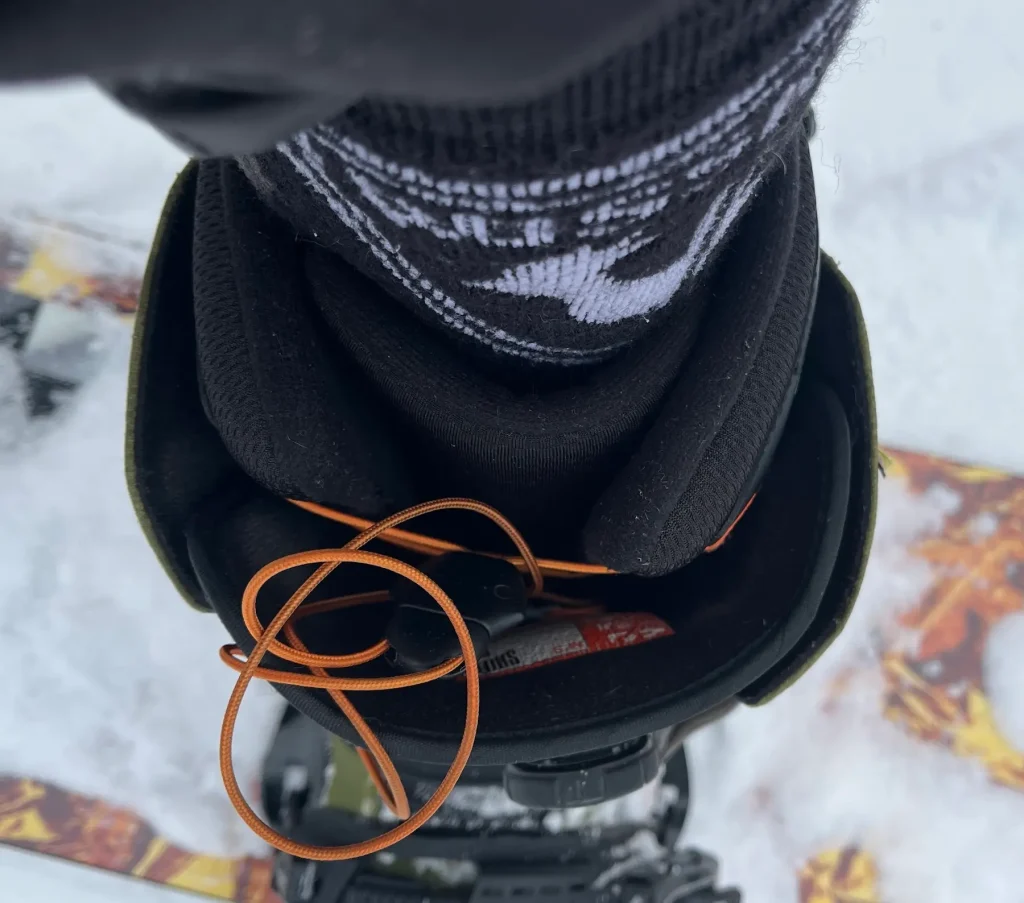
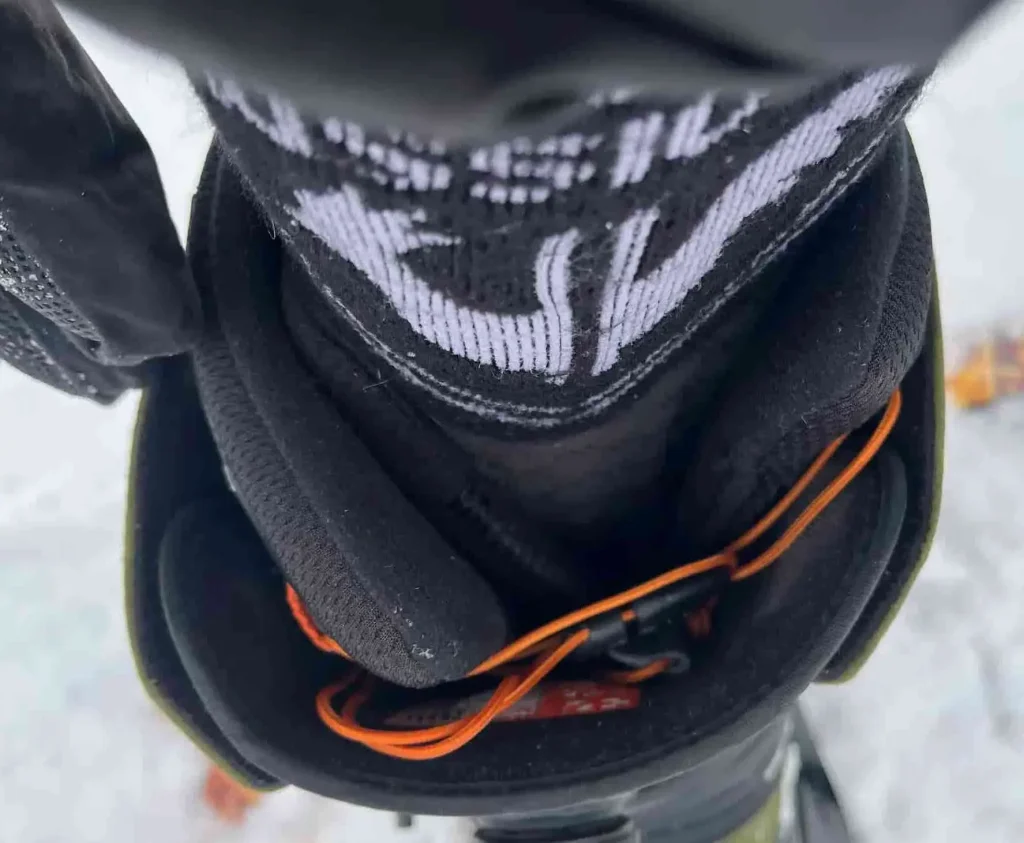
This is where I struggled. While the board felt amazing, my feet were often in agony. I have a weird issue where the tongue of my ThirtyTwo boots slides off to the side and the outer part of the boot digging into my shin and crushing the arch of my foot. And that is quite annoying – there is no point of putting the tongue back in its place because I know it will slide on the side immediately on the first ride.
- Why this matters: There were days in Austria where I had to stop riding early – not because of the board, but because of the boots.
- The Lesson: This board is so soft and flexible that you really need boots that lock you in properly. If your boots are sloppy, the “loose” feeling of the 3BT can feel even harder to control. (I’m currently testing a fix for these boots involving new insoles. I’ll write a full update on that soon).
The Verdict: Is the Bataleon FunKink Worth It?
If you are an intermediate rider looking to progress, or an advanced rider who just wants to cruise and play Absolutely, YES.
But you have to be patient, if you have no previous experience with the 3BT or 3D technology before.
The Pros:
- The “Cheat Code” for Powder: The 3BT shape lets you ride a shorter board. in deep snow without sinking. It’s just pure magic.
- Forgiveness: You can land jumps slightly sideways or messy, and the uplifted edges won’t slam you into the ground. It builds confidence fast.
- Price: I paid €391. For a board that handles freeriding in Austrian Alps and charging through wooden hills in Latvia, that is incredible value. I checked the new 2026 model you can get now for €470 (without any discounts) on Blue Tomato and Bataleon’s own website.
The Cons:
- The “Day 1” Scare: You will feel weird for the first few hours. But don’t return it yet. Just ride through it.
- Not for Racers: If your goal is to beat your friends’ speed record on black ice, get a stiffer camber board. This is for fun, not for speed.
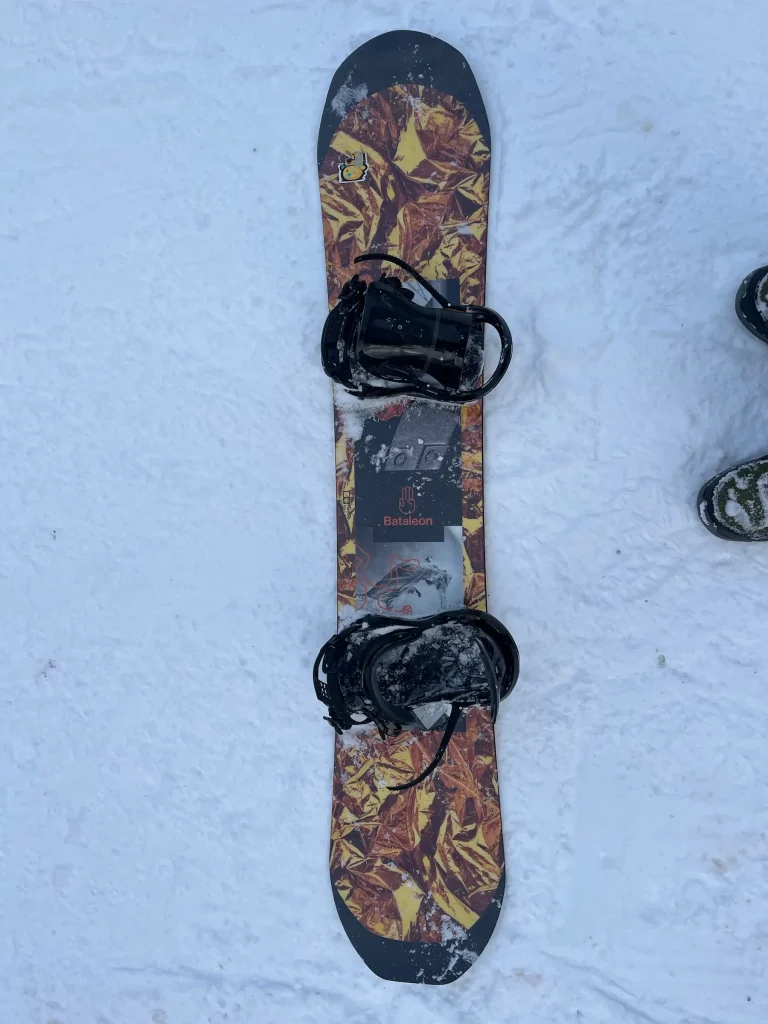
Final Score: 9/10 (Once you get used to it)
This board turned me from a nervous intermediate into a guy who looks for side-hits and deeper snow. It makes snowboarding feel creative rather than scary. And for a weekend warrior like me, that’s all I really want.