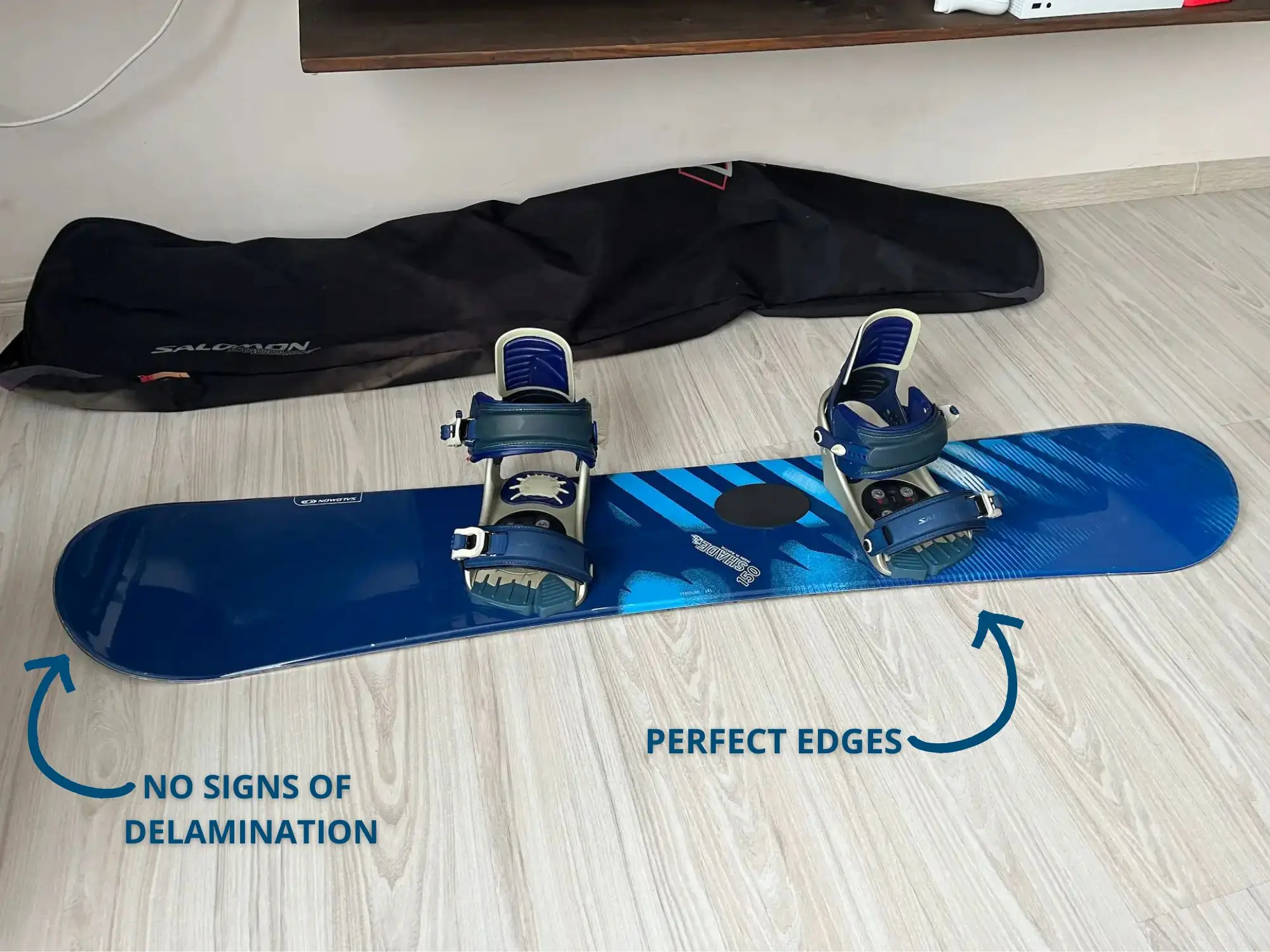
🚨 UPDATE (Feb 1, 2026): The “New Old Stock” Risk. Bad news. After just 12 hours of riding, the top sheet on this 2015 board delaminated (peeled off). It seems the glue dried out over the last 10 years. I am currently getting it repaired at a local shop. I will publish a full breakdown of the damage and the repair cost next week. For now, be very careful buying 10-year-old “new” boards.
My wife wants to learn to snowboard. This is great news, but also a dangerous financial game. If I go to the shop and buy her a brand new setup (Board: €450, Bindings: €200, Boots: €300), I’m spending nearly €1,000. If she goes to the mountain once, hates the cold, and decides snowboarding isn’t for her… that is a very expensive garage decoration.
So, I went on a mission: Can I build a safe, quality beginner setup for under €250? The answer is yes. Last week, I scored a full Salomon board + Salomon bindings + DC boots for exactly €200.
Here is how I found the deal and, more importantly, how I made sure I wasn’t buying trash.
The Find
I found a seller on a local marketplace called AndeleMandele who was selling his wife’s old gear.
- The Story: She tried snowboarding a few times, then got pregnant and after that of course the gear sat in a closet for years.
- The Price: He wanted €150 for the board + bindings and €50 for the boots pair.
- The Math: A day of rental gear costs ~€25 for a very beaten old set and ~€45 for a better one. If my wife rides this board 6 times, it has paid for itself – that is one factor. But learning and progressing on the same board every session is completely different story than getting a different board each time go out.
How I Knew The Board Will Fit?
I wasn’t just looking for any cheap board. I needed the right size. My wife is 171cm tall. The classic rule is that a board should come up to your chin. This Salomon board is 150cm, which is exactly “chin-height” for her. Why this matters? A shorter board (146-148cm) might be too unstable, and a longer board (154cm+) would be too hard for a beginner to turn. 150cm is the “Goldilocks” zone for her. Stable enough to learn, but agile enough to control.
The “Used Boot” Danger (And Why I Broke the Rule)
The #1 rule of snowboarding is: Never buy used boots. Boots mold to your feet. If you buy used boots, they are usually packed out and molded to someone else’s bunions.
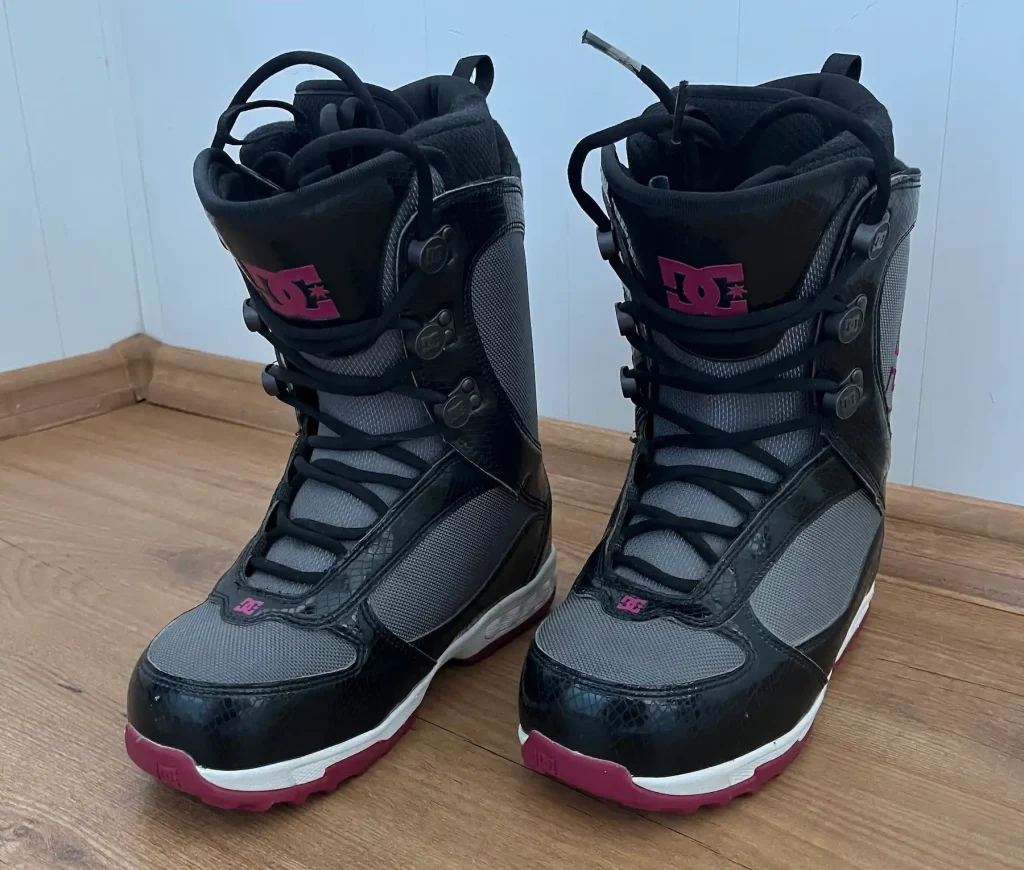
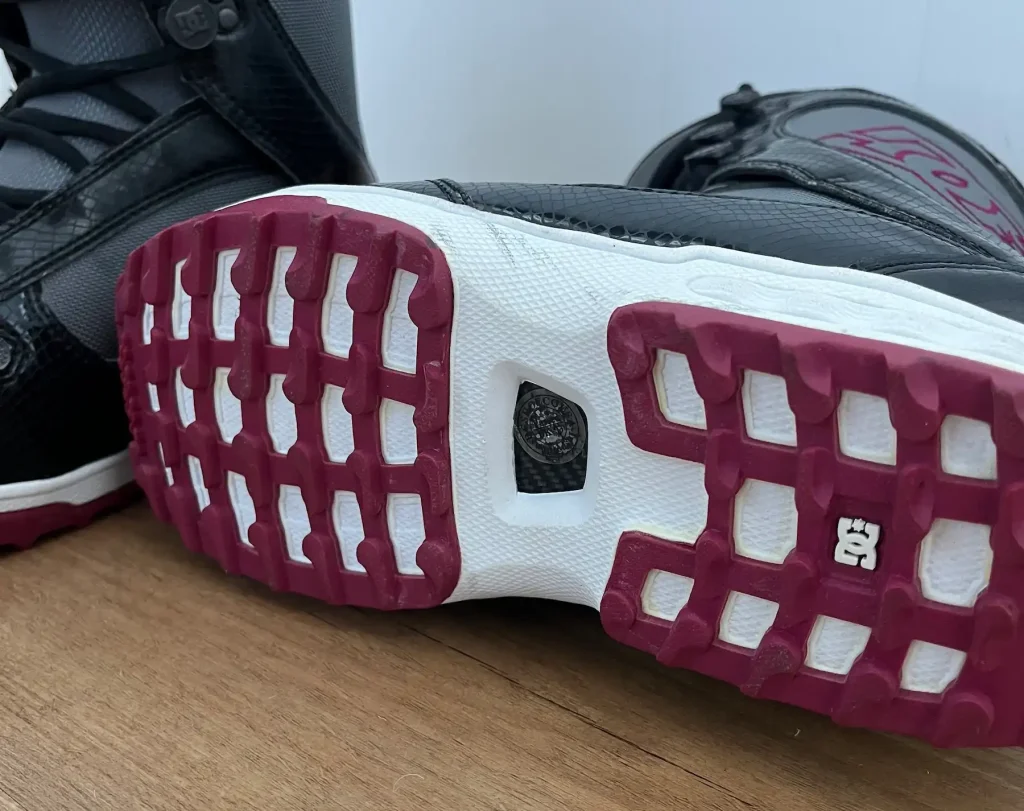
My Exception: I inspected these DC boots personally.
- The Smell Test: Zero smell. They smelled like a new shoe box.
- The Liner Check: The foam wasn’t compressed. It felt stiff and “fluffy.”
- The Sole: No wear on the rubber. These were “Closet Queens”. Boots that lived indoors, not on the mountain. If you find boots like this, buy them. If they look worn, walk away.
Used Snowboard Inspection Checklist
Buying a used board is risky if you don’t know what to look for. Here is the 3-minute inspection I did in the seller’s driveway:
- The Edge Check (Crucial): I ran my finger along the entire metal edge. I wasn’t worried about rust (that cleans off). I was looking for cracks. If the metal edge is cracked, the board is garbage. This one was perfect.
- The “Delam” Test: I looked at the sidewalls (the side of the board). If you see the layers separating (like an old plywood skateboard), that is “delamination.” Moisture gets in, and the board rots. This board was sealed tight.
- The Flex Test: I put the tail on the ground and flexed it hard. I listened.
- Crackling sound? = Broken core.
- Silence? = Good wood. This board was silent.
The Plot Twist: Why We Still Don’t Have Boots
Remember how I said the boots were a “perfect find”? Well, I was half wrong. They were in perfect condition, but they were the wrong size.
The “Label vs. Reality” Trap My wife’s foot is 25cm. The label inside the DC boots clearly said “25cm.” It should have been a Cinderella moment. But when she tried them on at home, her toes were crushed. I pulled out the liner and measured it with a tape measure. The result? 24cm.
- The Lesson: Snowboard boot sizing is not universal. A “Size 39” or “25cm” in one brand might be a 24cm in another. Never trust the label blindly. Always try them on, or if buying online, ask the seller to pull out the insole and measure the actual length.
The Resale Hustle (A Lesson in Timing)
Since they didn’t fit, I had to sell them. I listed them on Facebook Marketplace for the same price I paid (€50). Here is where it gets interesting for anyone trying to flip gear:
- December (No Snow): I listed the boots. Crickets. Zero messages.
- January (Snow Storm): The snow started falling in Riga on Tuesday. By Wednesday, my phone was blowing up.
- The “Filter” Strategy: Instead of wasting time meeting everyone who said “I wear size 39,” I replied to every message with: “Please measure your bare foot in cm. If it is more than 23.5cm, these will be too small.”
- Result: 80% of people realized they wouldn’t fit.
- The Winner: A girl with feet size under 25cm came over, they fit perfectly, and I got my €50 back.
Current Status: We have a board and bindings, but we are back to hunting for boots. (And this time, we are bringing a tape measure).
The Verdict
I now have a quality Salomon board and bindings sitting in my living room for a total cost of €150. It isn’t the newest 2026 model, and it doesn’t have the coolest graphics. But it is a brand-name, wood-core board that is perfect for learning to turn.
What’s Next? The board is ready, but the hunt for boots continues. Since the used market failed us and even though I see quite a lot of local listings for good used boots for €50-€80, we are pivoting to Strategy B: “New Old Stock.” I found a local shop selling brand new boots from previous seasons (Salomon Scarlet, Head Legacy and bunch of Northwave models) for 50% off retail prices. The goal is to get brand new, heat-moldable boots for ~€150 instead of €350.
UPDATE: We finally found the perfect pair! We bought the Burton Mint BOA (with a nice €60 discount). Read the full review on why we chose them here.
And after that comes the hard part: Teaching my wife to ride. Will we be shredding the Austrian Alps together next year? or will this end in a divorce lawyer’s office? Stay tuned. I’ll be documenting her “Zero to Hero” journey right here in this blog.
How much does a full beginner snowboard setup cost?
If you buy brand new current-season gear, a full beginner setup (Board, Bindings, Boots) typically costs between €800 and €1,000. However, as my experience proves, you can build a safe, high-quality used setup for under €250 if you know what to look for.
Is it cheaper to rent or buy a snowboard for beginners?
If you plan to ride more than 6–8 days, buying is usually cheaper. Daily rentals average €25–€45 per day depending on the resort. Spending €200 on a used setup pays for itself in just a few weeks of riding. Plus, owning your own gear helps you progress faster because you aren’t adjusting to a different board every time you go to the mountain.
Is it safe to buy used snowboard boots?
The general rule is no, because boots mold to the previous owner’s feet. However, there is one exception: “Closet Queens.” If you can find boots that were bought, worn once or twice, and then stored (like the DC boots I found), they are safe to buy. Always check for a “fluffy” uncompressed liner and zero wear on the rubber sole before buying.
What should I look for when inspecting a used snowboard?
To avoid buying a broken board, perform these three checks:
1. Edge Check: Run your finger along the metal edge to feel for cracks.
2. Delamination Test: Look closely at the sidewalls (the side of the board) and the nose/tail. It should look like one solid sandwich. If you see a gap that looks like old plywood splitting open, or if you can see “air” between the metal edge and the board, that is delamination. It matters because once the layers separate, moisture gets into the wood core. The board will rot from the inside out and eventually snap.
3. Flex Test: Bend the board and listen for cracking sounds, which indicate a broken core.